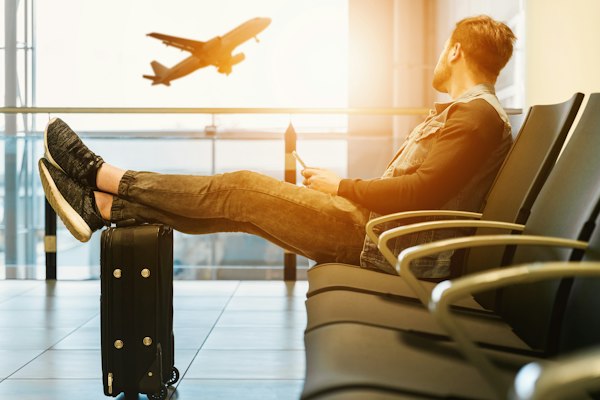
Economy class on a long-haul flight is not, and has never been, a comfortable experience. Anyone who tells you otherwise is either selling something or has not flown economy on a long-haul flight recently. The question is not whether it is comfortable but whether it is bearable — and within bearable, whether the gap between the best and worst economy products is large enough to matter when you're booking. After flying economy on eighteen carriers over the past twelve months, I can confirm that the gap is very large indeed, and that the difference between the best and worst seats in economy on a fourteen-hour flight is approximately the difference between arriving capable of normal human function and arriving in a condition that should probably be monitored by a medical professional.
The Methodology
I flew economy specifically, in the middle third of the cabin (not exit row, not front row), on routes between ten and sixteen hours. I assessed seat pitch and width, recline, the entertainment system, food quality, crew engagement, and what I've started calling the noise environment — the aggregate of engine sound, ambient conversation, and baby-to-adult ratio that makes some cabins feel manageable and others like an experiment in sensory endurance. Price was not a criterion. Repeatability was: would I book this airline again in economy for a flight of this length?
The gap between the best and worst economy products on a fourteen-hour flight is the difference between arriving functional and arriving in a condition that should be monitored.
The Rankings
1. Singapore Airlines
Singapore Airlines Economy remains the standard against which every other carrier's economy product is measured, and on the evidence of my most recent flight — JFK to Singapore on the new non-stop — it continues to deserve that position. The seat pitch is 32 inches, which is not exceptional, but the seat itself is narrower at the base and wider at the shoulder than most competitors, which has the effect of making the available space feel larger than the measurement suggests. The food is better than it has any right to be at this price point and altitude. The crew operate with a calm professionalism that never tips into the manufactured cheerfulness of some competitors. I slept for six hours. For economy, this is extraordinary.
2. Japan Airlines
JAL Economy on the 787 between London and Tokyo surprised me. The seat — the Sky Wider seat on the 787 — is genuinely wider than the industry average, and the headrest adjusts in four directions with an ease that turns out to matter at hour nine when you have been trying to sleep against a window that is just slightly the wrong angle. The meal service is conducted with a care that borders on the ceremonial: individual dishes rather than a tray, condiments offered separately, a genuine question about your preference rather than a binary choice announced from three rows back. I arrived in Tokyo feeling like a person.
3. Qatar Airways
Qatar's Economy product on the A350 — specifically the A350, not the 777, where the seat width is narrower — offers the best in-flight entertainment system I encountered in any economy cabin. The screen is large, the content library is absurdly comprehensive, and the response time of the touchscreen does not make you want to tap it repeatedly in increasing frustration, which distinguishes it from at least four competitors I tested. The food is inconsistent — good on the Doha-London route, less so on the Doha-Sydney sector — but the seat and the service are reliable across routes in a way that matters for frequent flyers.
Airlines to Approach With Caution
I won't be specific about the worst performers, partly from editorial caution and partly because economy product quality varies significantly by aircraft type within a single carrier. What I will say is that three of the eighteen carriers I flew delivered seats with a pitch of 29 inches or below, which on flights over twelve hours produces the specific back compression that takes approximately two days to resolve. Thirty-one inches is the minimum I would now book for a flight of this length; 32 is comfortable; anything above 33 in economy is a reason to choose that carrier over the alternatives if the price is comparable.
The other variable worth checking before booking is aircraft type. The 787-9 and A350 are the two aircraft on which economy products tend to be best — partly because their cabins are wider than older aircraft, partly because both types allow larger windows and better air quality, and partly because airlines tend to configure newer aircraft with updated seating products. An older 777 in three-class configuration will have worse economy seats than a new 787 on the same route. This information is available at the time of booking and is worth ten minutes of research.